

Discover the best developer tools,
SaaS products & open-source projects
Explore handpicked SaaS products, open-source projects, and 65+ free developer tools,
plus cheat sheets, snippets, and free resources — curated for builders.
Trending Leaderboard
Top products and open-source projects gaining attention this week.
 MarcX StudioIndie studio making focused iPhone and Mac apps: RooCards, Snap Spell spelling practice, NumListen number listening trainer and Auto Ducking. Apps are free, some with optional Pro.307
 GleapGleap is an AI-native help desk for software teams that combines in-app bug reporting, session replay, live chat and a roadmap with Kai agents, including Kai Resolve, which investigates hard tickets using logs and read-only code access.274
 VectoreeGive your agent a backend. Models, auth, database and storage in one cloud — from demo to production.165
- 4
 WYR PlayPlay free Would You Rather questions online with WYRPlay. Explore fun, funny, hard, kids, friends, and couples questions, vote for your choice, and see real community results.199
 - 5
 ToSongToSong is an AI song maker: paste lyrics or describe a song and get melody, arrangement and vocals in one generation. 20 free credits on signup.160
Open Source Projects
Discover trending GitHub repositories.
ESC JSON Form Angular
Angular Standalone Component for JSON Form Editing
esc-editor
Esc-editor is a feature-rich, TypeScript-friendly WYSIWYG editor for React that provides robust table support, image resizing, and dark mode via CSS custom properties.
awesome-iot — 🤖 A curated list of awesome Internet of Things projects and resources
🤖 A curated list of awesome Internet of Things projects and resources.
Build Your Own X
Build Your Own X is an open-source learning platform that guides users through recreating complex technologies from scratch, fostering deep understanding and practical skills.
awesome-selfhosted — A list of Free Software network services and web applications which can be hosted on your…
A list of Free Software network services and web applications which can be hosted on your own servers
OpenCode: Open-Source AI Coding Agent for the Terminal
Open-source AI coding agent for the terminal that works with 75+ LLM providers and local models.
Free Developer Tools
Rotates daily67+ browser-based tools that work instantly with no signup
ENV to Docker Compose
Convert .env files to docker-compose environment snippet
OG Image Generator
Generate Open Graph images using Satori in Next.js
HTML Minifier for Comments and Inter-Tag Whitespace
Minify HTML by removing whitespace and comments
JSON to TypeScript Converter
Convert JSON to TypeScript interface and type definitions
Screen Resolution Tester
Test and display current screen resolution details
Markdown to HTML Converter with Preview and Source View
Convert Markdown text to HTML with live preview
Latest from the Blog
Insights, guides and stories for builders.
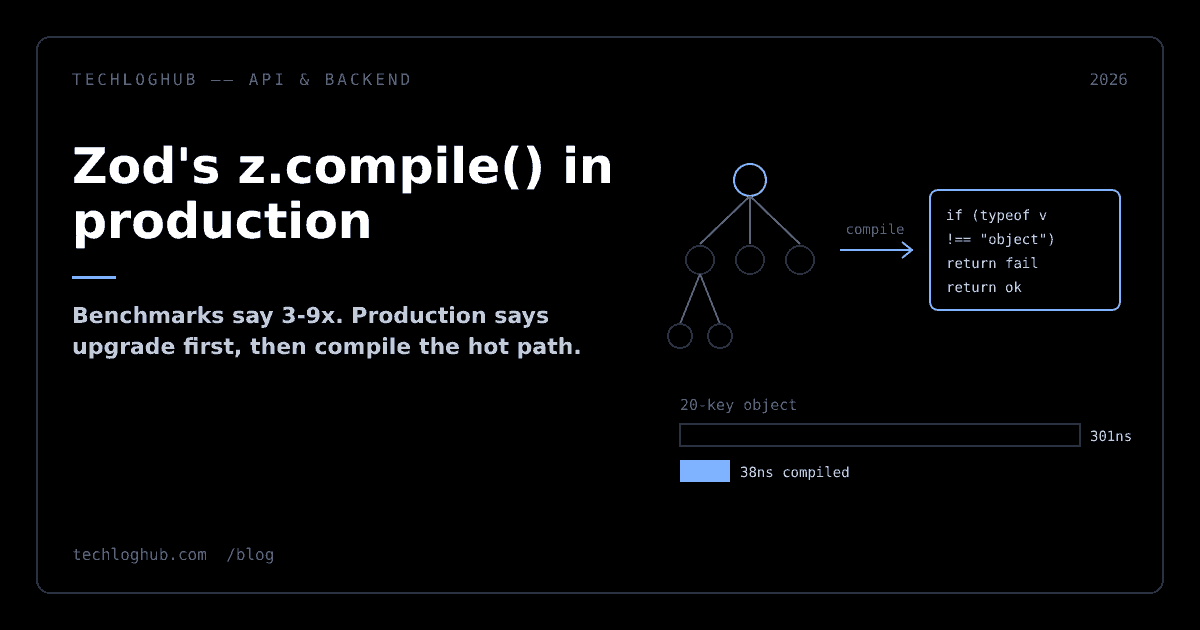
Zod's z.compile(): Where the Speedup Shows Up in Production
Zod 4.5's z.compile() parses 3-9x faster in benchmarks, but Trigger.dev's production data tells a smaller story. When to turn it on and what to check first.
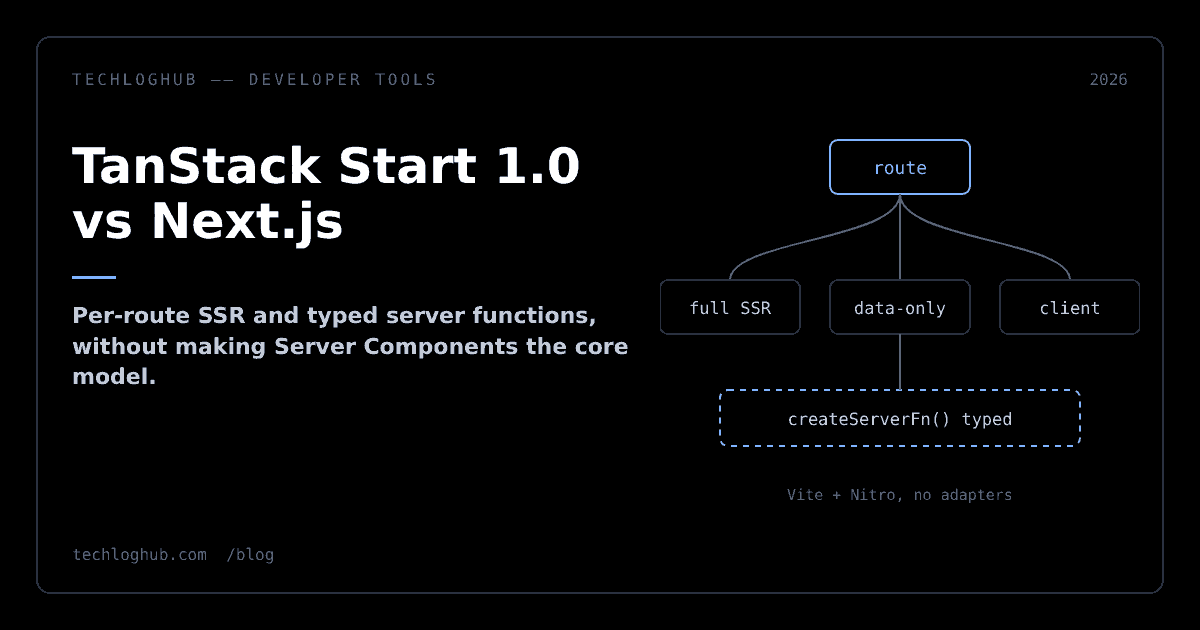
TanStack Start 1.0 Is Stable: When It Beats Next.js, When It Doesn't
TanStack Start 1.0 shipped as a stable full-stack React framework. What 1.0 commits to, how it differs from Next.js, and who should actually migrate.
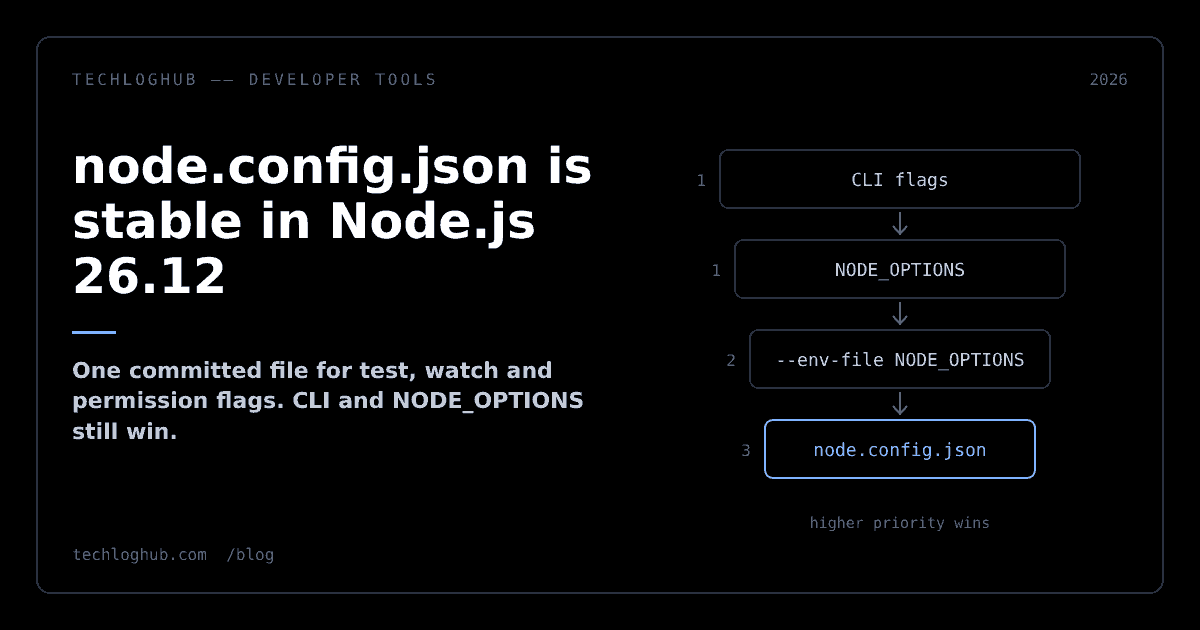
Node.js 26.12 Makes node.config.json Stable: What to Move Into It
Node.js 26.12 marks the config file stable and renames the flag to --config-file. What belongs in node.config.json, the precedence rules, and the traps.
One email a week
A weekly digest of the new products, comparisons, deals and releases published on TechLogHub. One-click unsubscribe in every issue.