



Maine breach portal abused to publish fake data breach disclosures
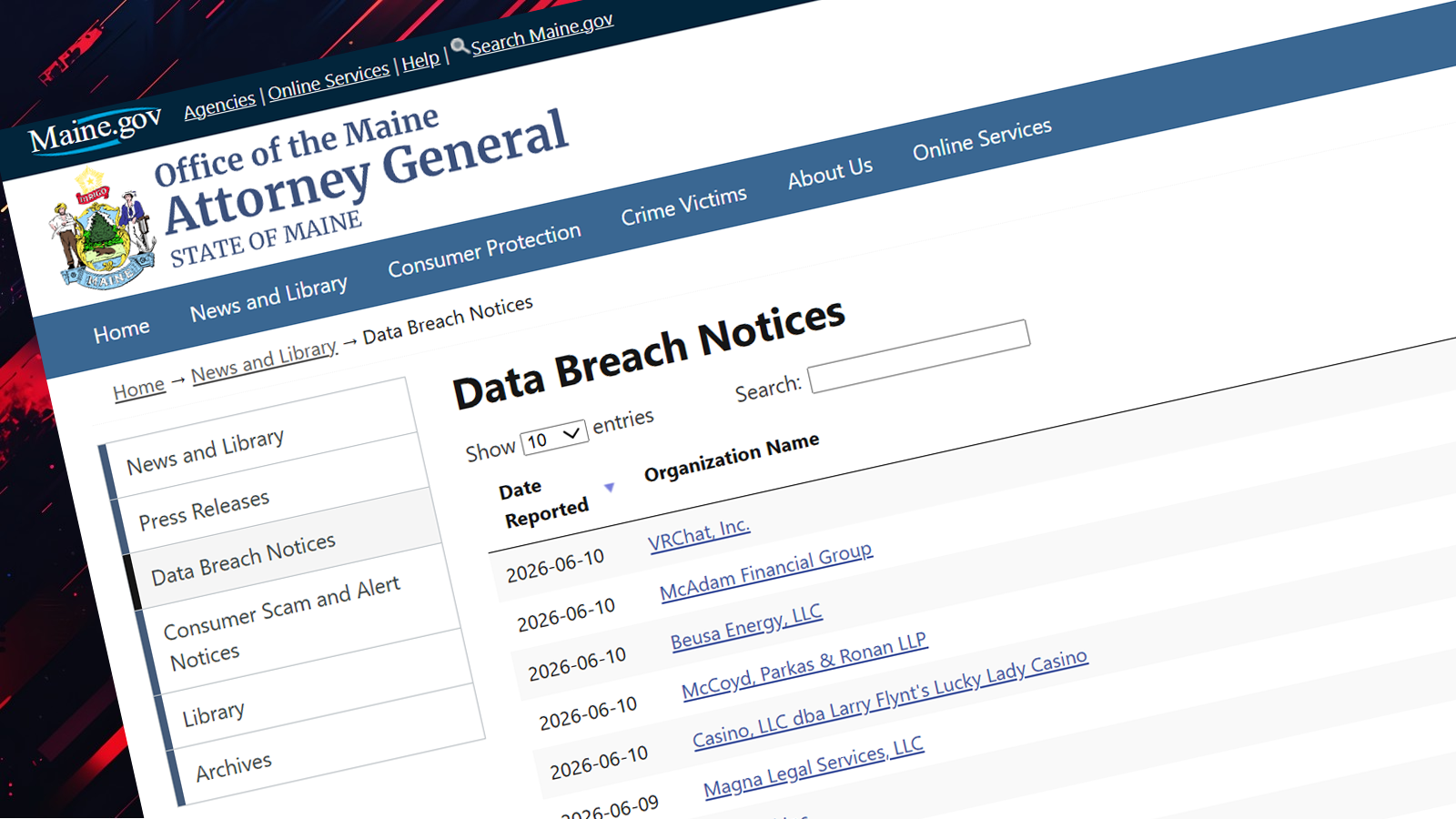
A misinformation campaign led to fake data breach disclosures being posted to Maine’s breach portal, including a bogus VRChat notice. VRChat denies submitting the notice and says the cited employee does not exist, with the company seeking removal from the portal. Maine’s Attorney General’s Office confirmed the portal accepts submissions without verification and flagged another suspicious entry (Discord). The episode highlights the need for independent verification of breach notices before treating portal postings as legitimate.
Maine breach portal abused to publish fake data breach disclosures
OverviewIn a notable case of misinformation, fraudulent data breach notices were submitted to Maine’s official breach portal and posted publicly before verification could occur. The result was a wave of confusion, with several companies forced to publicly deny the claims. Among the entries scrutinized, a notice purportedly filed on behalf of VRChat—the multiplayer social virtual reality platform—has drawn particular attention due to the scale of claimed impact and the apparent use of a fictitious employee’s name.
What happened
- A bogus data breach notification appeared in the Maine Attorney General’s breach disclosure database.
- The entry carried the name of VRChat, a well-known VR social platform, and included a letter announcing a data incident.
- A company representative later identified the notice as fake, stating that the named employee does not exist and that VRChat had not submitted any such notice.
- VRChat’s leadership publicly supported this denial, indicating the organization was in the process of requesting removal of the fake filing from the portal.
VRChat and the platform contextVRChat is a cross-platform social virtual reality service built on Unity, launched initially for Windows and Oculus Rift in 2014. The service enables users to interact through customizable avatars within user-generated worlds, blending social interaction with immersive VR experiences. The recent incident underscores how credible-seeming submissions can surface in official channels, prompting quick responses from affected companies.
The fake data breach claim and its alleged scope
- The bogus VRChat notice claimed that personal data of more than 2.4 million users was exposed due to unauthorized access to VRChat’s cloud environment.
- The supposed breach letter listed several data categories that could have been affected, painted as part of a formal notification to impacted individuals.
- The letter described a hacking window from May 10 to May 12 and outlined supposed forensic results, remediation steps, and recommended user actions to bolster security.
Details drafted in the fake notice (summarized)
- Affected data types allegedly exposed:
- VRChat username
- Email address associated with a VRChat account
- VRChat+ subscription status
- Login history, including device details, hardware identifiers, and IP addresses
- Steam or Meta user IDs linked to VRChat accounts
- A professionally worded notification letter was produced to resemble a legitimate consumer-facing breach notice.
Discrepancies and red flags
- The entry was drafted with plausible language and structure, including sections about unauthorized access, investigation results, and security enhancements.
- A number of inconsistencies were noted upon closer inspection, including the appearance of an employee name that did not exist and contact details that did not align with VRChat’s real-world communications.
- The document’s metadata and submission details suggested a lack of proper verification prior to posting on the public portal.
Discord submission and broader portal vulnerabilities
- Earlier in the same period, the Maine AG’s office acknowledged another suspicious filing—this time attributed to Discord—claiming a multi-million user impact.
- The office noted that anyone could submit a breach notification form to the portal, with submissions proceeding to publication without independent verification.
- Unlike typical company-disclosed notices, the Discord entry lacked a formal notification letter from the company and contained generic or questionable contact information.
- Inconsistent dates were present in this entry, including a claimed incident date of July 9, 2024, a discovery date of August 8, 2025, and an unrelated consumer notification date of January 1, 2000.
What VRChat and the Maine AG stated
- VRChat leadership, including Charles Tupper, Head of Community, stated that the Maine portal notice was fraudulent and that the cited employee did not exist. The company indicated it would work with the Maine AG’s office to have the notice removed.
- The Maine Office of the Attorney General confirmed the issue and said the notice would be removed, adding that there was no independent verification of the breaches listed by submitters.
- The office also noted that breaches reported via the portal may require independent confirmation from the submitting entity and the affected company.
Broader implications for data breach disclosures
- The incident highlights a vulnerability in official public portals that can be exploited to disseminate false information about data incidents.
- False filings can prompt reputational harm, customer confusion, and unnecessary panic before a company has official confirmation of any breach.
- The episode reinforces the need for journalists and consumers to verify breach notifications directly with the affected organizations, rather than relying solely on portal postings.
- It also underscores the importance of implementing stronger vetting processes for disclosures published in publicly accessible registries.
Takeaways from the incident
- Public breach portals can be targets for misinformation campaigns, especially when they lack stringent verification steps.
- Names, dates, and contact details in fraudulent notices can be crafted to look credible, making early verification essential.
- Even high-profile platforms can be misrepresented in notices that appear legitimate at first glance.
- Independent confirmation remains a critical step before treating portal entries as bona fide data incidents.
ConclusionThis incident demonstrates how easily misleading data breach disclosures can surface in official channels when verification is insufficient. While VRChat and Discord were central to the discussion, the underlying issue is the reliability of public breach notification processes themselves. The event emphasizes the need for careful scrutiny and independent verification of breach disclosures before they are treated as verified incidents, protecting both companies and the public from unnecessary alarm and reputational harm.